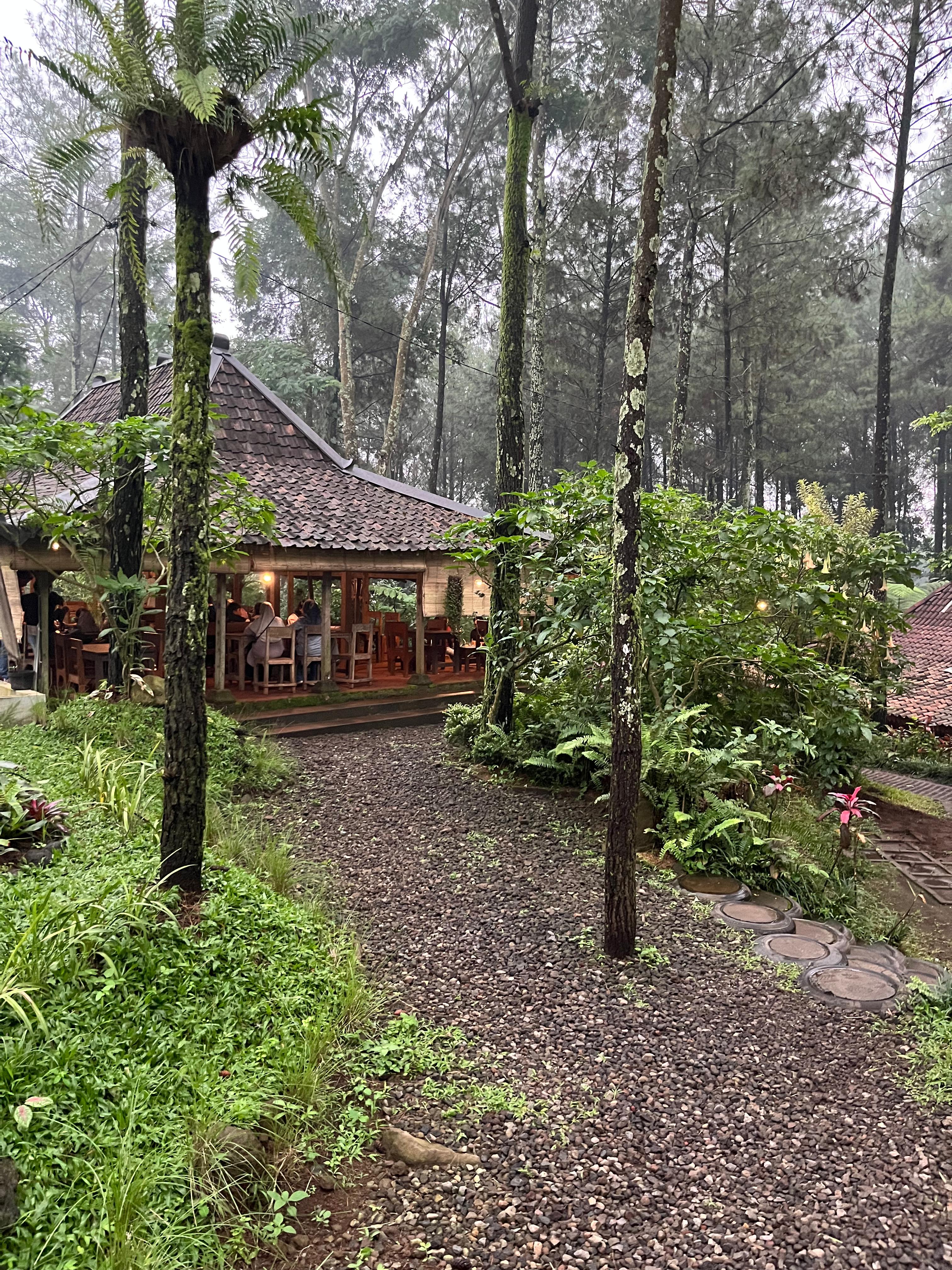
FORESTS ARE CUT DOWN, MINING IS EXCAVATION
FORESTS ARE CUT DOWN, MINING IS EXCAVATION: YOUNGS HAVE THE RIGHT TO
DEMAND THEIR FUTURE
By: Dr. Budi Rianto,
Drs. M.Si, Postgraduate Lecturer, Hang Tuah University, Surabaya
Sustainable
development is essentially an intergenerational promise: that the current
generation can live in prosperity without sacrificing the rights and future of
future generations. However, this promise is now threatened by reckless logging
and mining practices, carried out by both companies and religious
organizations. These two activities are not merely economic actions, but rather
the erosion of the rights of the younger generation to the environment and
natural resources that they should inherit in the future. When forests are
cleared and the earth is mined without control, the wealth of the younger
generation is being plundered, by those supported by those in power. The
ecological and mineral wealth that should be the nation's future capital has
been completely depleted by the short-term interests of the current generation
in power, and then enjoyed by a handful of actors who enrich themselves and
their families, even to finance the effectiveness of their power to control the
people, nation, and state according to the law.
Deforestation
essentially robs the rights of unborn generations. This is because forests
support life. They store water, protect the air, stabilize the climate, and are
home to biodiversity, both flora and fauna, a gift from God that should be
enjoyed by future generations. However, illegal logging and uncontrolled forest
clearing have eliminated these vital functions. The damage caused by reckless
logging, whether legally permitted by the government or illegally, means the
loss of long-term economic resources such as ecotourism and non-timber forest
products, water and soil quality, disaster mitigation systems, the living
spaces of indigenous communities, and local wisdom.
When all of
this is lost due to reckless logging, the younger generation no longer inherits
ecological wealth but inherits long-term ecological risks: floods, landslides,
crop failures, and the loss of clean water sources. In other words,
deforestation violates the fundamental right of young people to live in a
healthy and productive environment.
Similarly,
mining, whether legal or illegal, essentially depletes the savings of the
future, which are the rights of the younger generation. In theory,
deforestation can recover, although it takes a long time and certainly cannot
restore previous ecological conditions, especially regarding flora and fauna.
Mining is even more brutal, because the minerals mined are non-renewable. Gold,
nickel, coal, bauxite, and tin, once extracted, are depleted forever. Every ton
of minerals extracted today is essentially the savings of future generations,
forcibly disbursed by the current generation in power. Bad mining leaves
behind: giant sinkholes that endanger communities, river pollution by heavy
metals, loss of agricultural land, water crises, and protracted social
conflict.
While the
damage is borne for decades, the profits from mining are concentrated in the
hands of certain groups who enrich themselves. In essence, this is a concrete
form of intergenerational injustice: the current generation benefits from the
results, while the next generation pays for the damage.
Forest and
Mining Products Must Be Returned to Education.
Logging and
mining activities generate profits, but because they involve property rights
for future generations, quality education must be prioritized. This is the only
way to ensure that, despite the depletion of natural capital, human capital
increases, particularly the capacity to maintain the ecological well-being of
future generations. Education is an investment that can transform damage into
opportunity.
With proper
funding allocation, young people can access better quality schools.
Universities can produce scientists who develop clean energy and environmental
technologies. Vocational training can prepare a future workforce based on a
green economy, a blue economy, a recycling economy, and even an upcycling
economy. Scholarships must be provided by mining operators, including
corporations, government institutions, and community organizations that hold
logging and mining concessions for minerals and other natural resources God has
given to humanity. Scholarships must be widely opened to young people in mining
and forest-producing areas for quality education related to the ecological
damage caused by the plundering of the wealth of future generations.
When natural
resources are taken, the wealth of knowledge must be returned so that future
generations can recover from the damage. This is because natural resource funds
must not become a breeding ground for corruption or a platform for enriching
individuals. The primary goal of natural resource management is not to
accelerate the accumulation of private profits, but to ensure the sustainable
prosperity of the entire nation. Natural resources belong to the public, not to
any particular group. Therefore, there must be no mining oligarchs enjoying
private royalties, illegal loggers accumulating ill-gotten gains, or officials
abusing exploitation permits.
Natural resources
are a shared heritage, so their results must be returned to the common good—and
education is the most powerful, strategic, and long-term form of interest. Not
a single rupiah of forest and mining wealth should be used to enrich those
involved.
Investment in
education is moral compensation for environmental damage, because the younger
generation has the right to live in a sustainable environment. If that right is
violated by logging and mining, the state and stakeholders are obligated to
provide compensation in the form of quality education, access to technology,
capacity building, and sustainable economic opportunities. Only in this way can
future generations have a future, even if the natural environment they
inherited has been depleted.
Current Rulers Shouldn't Inherit Problems
We cannot
continue to build civilization at the expense of our children's future. This is
because the felling of forests and the mining of mines should serve as a
reminder that every economic action has moral consequences. If natural
resources disappear without a trace, we are stealing the future. But if natural
resources are converted into quality education, we are building the future.
Natural resources may be depleted, but the wealth of the intellect must
increase, and the ability to maintain ecological sustainability for life must
be inherited. And this can only be achieved if the proceeds of logging and
mining are allocated to the education of the younger generation, not to enrich
the perpetrators, whether they are rulers, corporations, mass organizations, or
those who benefit from the plunder of natural resources that actually belong to
future generations.

Dr.
Budi Rianto, Drs. M.Si. was born in
Trenggalek, April 30, 1963, currently working as a Lecturer at the DPK Kopertis
Region VII in the Postgraduate Program of the Faculty of Social and Political
Sciences, Hang Tuah University, Surabaya, email: budi.rianto@hangtuah.ac.id,
tel. 081234554710. Graduated from Bachelor's Degree, in the State
Administration Study Program, Faculty of Administrative Sciences, Brawijaya
University, Malang, Graduated in 1987, completed his Master's degree in the
Master's Program (S2) at the Postgraduate program of Gadjah Mada University
Yogyakarta, State Administration Study Program, Department of Social Sciences,
Graduated in 1997, and completed his education in the Doctoral Program in
Administrative Sciences, specializing in Public Administration, Brawijaya
University Malang, Graduated in 2008. His organizational activities besides
being a Member of the Expert Council of the East Java PGRI in 2013-2017, also
as a Member of the Education Council of the East Java Provincial Government
2015-2020 and also as a member of the management of the National Resilience
Institute Alumni Association, East Java Commissariat. Currently serving as
Chair of the BRIN-UHT Surabaya Research Collaboration Center.